Late detection
Haemoglobin-led pathways often act after anaemia is already present.

Impact
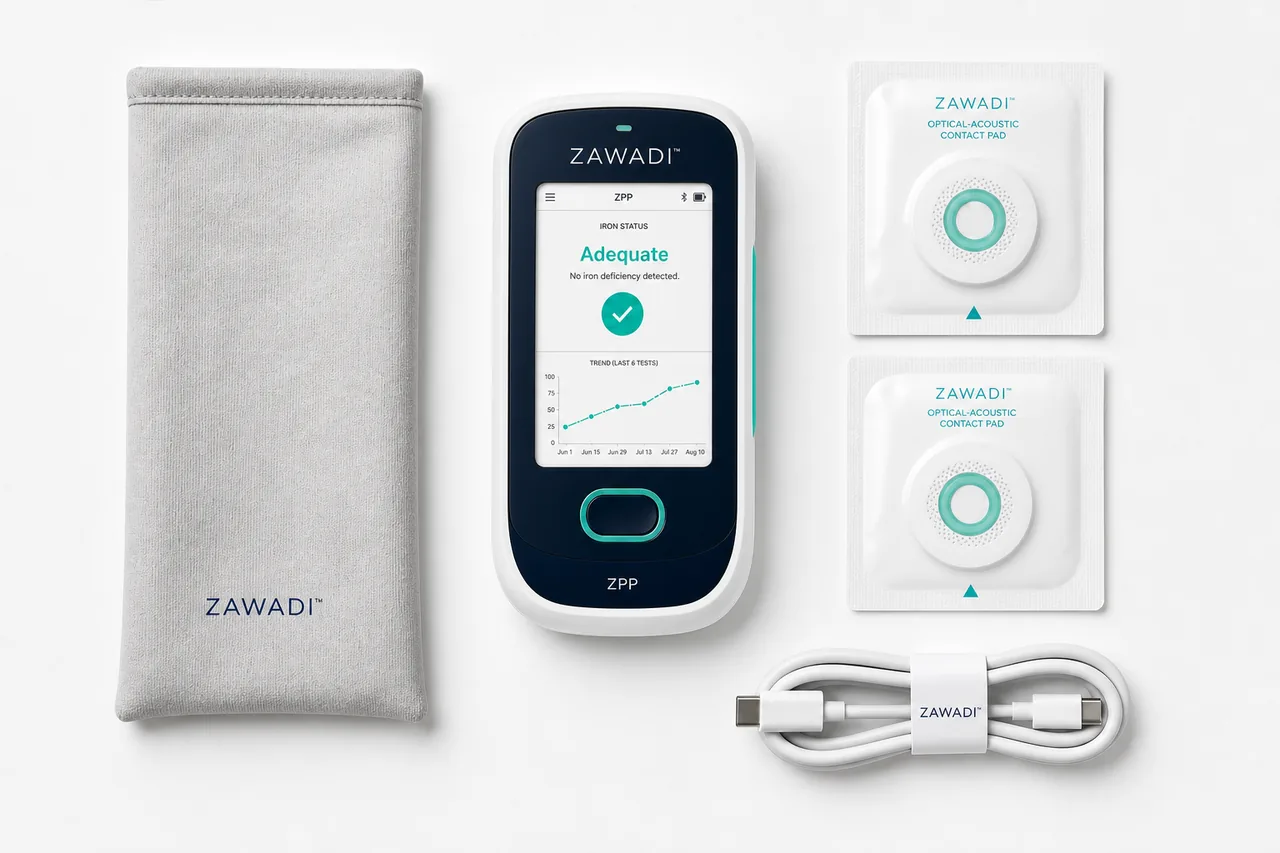
Iron deficiency affects energy, cognition, pregnancy, recovery, and long-term health. ZAWADI explores a simpler, earlier pathway — without starting with a blood draw.
The unmet need
Many pathways depend on blood collection, laboratory infrastructure, and markers that identify the problem only after it has progressed.
Haemoglobin-led pathways often act after anaemia is already present.
Blood draws and lab loops limit repeat screening in busy antenatal clinics.
Earlier iron restriction is actionable — but rarely visible in decentralised care.
The timing gap
That is the prevention window ZAWADI is built to observe — before anaemia begins.
Intended settings
Designed around the realities of point-of-care screening — not a central lab workflow.
Repeatable screening alongside existing ANC visits.
Portable form factor for programmes beyond fixed facilities.
Built at the intersection of diagnostics and maternal health.
Future expansion toward longitudinal iron-status insight.
Beachhead
Rwanda antenatal care first — then expand across women's health and treatment monitoring as evidence allows.
Beachhead
~330,000 antenatal care visits per year — a concentrated, routine screening touchpoint.
Expand
Same reader, same consumable, new cohorts reached through existing frontline structures.
Deepen
Repeatable measurement makes treatment response trackable over time.
Scale
Regions where iron deficiency burden and ANC infrastructure overlap most strongly.
Development-stage notice: ZAWADI is under active validation. Not a diagnostic substitute. Regulatory status: Research and development programme — not submitted for regulatory clearance and not offered for clinical diagnosis or commercial use.